DIWASS implementation: first lessons learned from the European battery recycling sector
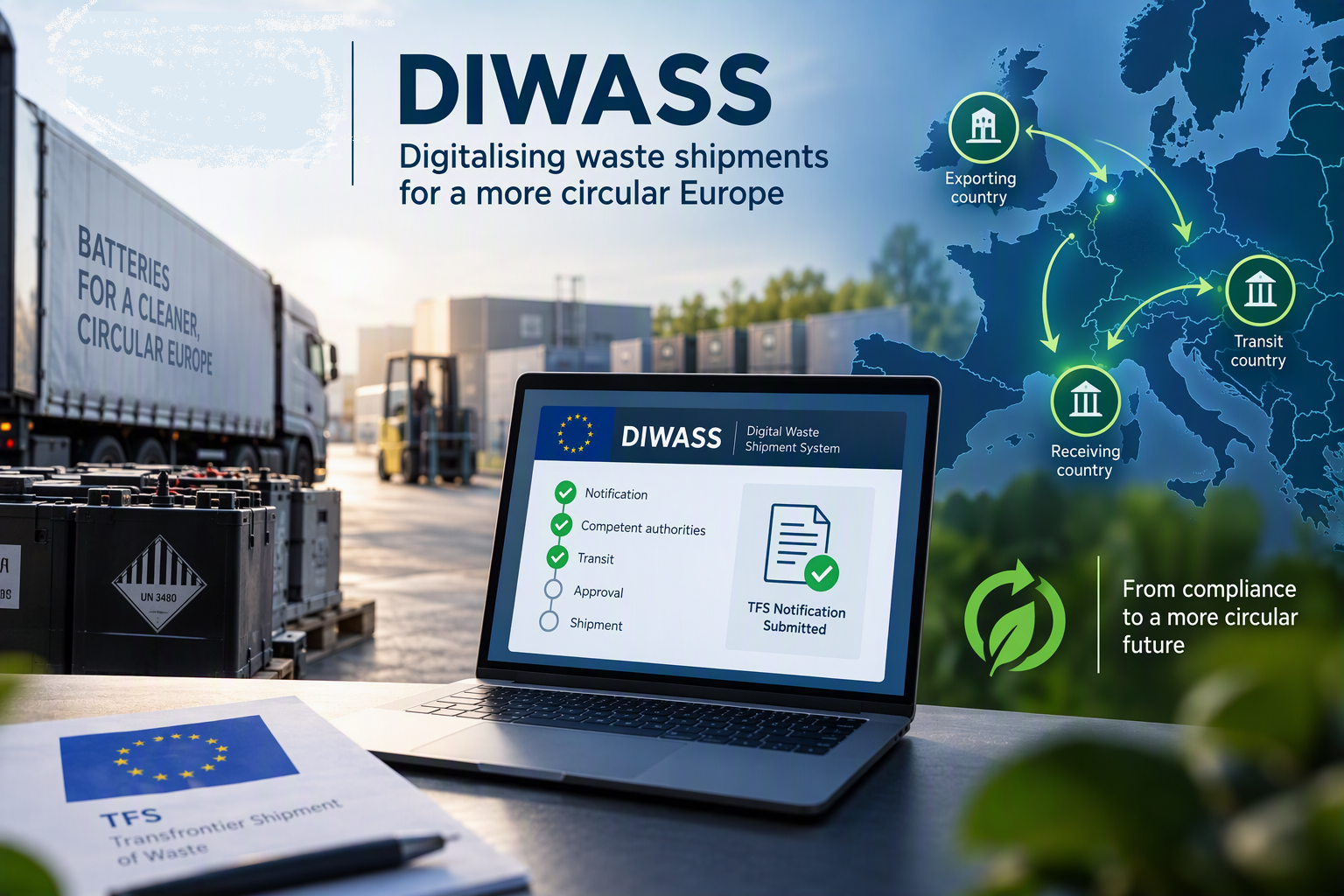
Since 21 May 2026, notifications for cross-border shipments of batteries have had to be submitted digitally through the DIWASS system. This requirement also applies to Annex VII material, although implementation timelines differ across European countries. In some countries, the transition is taking place in stages. In the Netherlands, for example, the digitalisation of the Annex VII process has been delayed until the end of 2026.For the battery recycling sector, the transition itself is generally manageable. Batteries are classified as hazardous waste in most European countries, and companies in our sector are already highly experienced with Transfrontier Shipment of Waste (TFS) procedures.The real test, however, is whether the digital system works smoothly between the exporting country, transit countries and the receiving country.
Several months into the implementation of DIWASS, EBRA members across Europe are beginning to share their practical experiences. While it is still too early to draw definitive conclusions, the feedback received so far highlights several areas that deserve attention.
1. Requests for additional information are not always clearly communicated
One issue raised by members concerns the information required to complete a TFS notification dossier. In some cases, additional information is needed before the competent authority in the country of export considers the dossier complete and can continue the procedure with the competent authorities in the transit and receiving countries. Members have reported situations where the DIWASS system itself does not clearly generate a request or notification explaining that additional information is required. Some competent authorities therefore send a separate email to the notifier requesting the missing information. While this manual intervention can help resolve individual cases, it reduces the efficiency that a fully digital process is intended to provide. Ideally, the system should clearly flag missing or incomplete information and automatically inform the notifier about the action required.
2. Better validation of EWC/Eural codes and material descriptions
Another practical issue concerns the relationship between EWC/Eural waste codes and material descriptions. Members have reported that the system can allow a waste code to be selected that does not correspond correctly with the material description entered into the notification. Without an automated connection or validation between these two fields, inconsistencies can enter the application process. These errors can, of course, be identified and corrected later, but this requires additional work by companies and competent authorities. A digital system should ideally identify such inconsistencies at the moment the information is entered. Stronger validation between waste codes and material descriptions could therefore improve both data quality and processing efficiency.
3. Different interpretations between competent authorities
A potentially more significant issue has been reported by an EBRA member located in a European country outside the EU where the digital system should also be implemented. The company has experienced serious difficulties establishing the correct TFS notification procedure because the competent authorities in the exporting and importing countries apply different interpretations of the requirements. This highlights an important point about the digitalisation of cross-border waste shipments: A common digital process does not automatically create a common interpretation of the underlying rules. For companies operating across national borders, alignment between competent authorities is therefore just as important as the technical functioning of the digital system itself.
Annex VII: another area to watch
The digitalisation of green-listed waste shipments under Annex VII will require particular attention. Where national implementation timelines differ or individual countries apply different procedures, companies operating across several jurisdictions may have to work with different processes during the transition period. EBRA will therefore also be interested in hearing from members about their practical experiences with Annex VII digitalisation as national systems are introduced.
Early challenges, but also an opportunity to improve
It would be premature to draw definitive conclusions about DIWASS only a few months after its implementation. A digital transition of this scale, involving companies and multiple competent authorities across different jurisdictions, will inevitably generate practical questions during its initial phase.Nevertheless, the experiences reported by EBRA members so far indicate several areas where improvements could make a real difference:
• clearer automated notifications when information is missing or incomplete;
• stronger validation between waste codes and material descriptions;
• greater consistency in procedures and interpretations between competent authorities;
• clearer guidance for shipments involving European countries outside the EU; and
• practical and harmonised implementation of digital procedures for Annex VII shipments.
Addressing these issues early will help ensure that digitalisation ultimately delivers what both industry and authorities need: a predictable, efficient and transparent system for cross-border waste shipments.
EBRA wants to hear from you
The examples above provide only a first indication of the practical experiences emerging across Europe. As companies gain more experience with DIWASS, we expect additional lessons to emerge. Importantly, EBRA does not only want to hear about problems. We also want to know what is working well.
EBRA therefore invites its members to share both positive and negative experiences with the EBRA Secretariat. We will collect and consolidate the feedback to develop a practical overview of implementation issues, recurring challenges and good practices across Europe. This can then be used to support a constructive dialogue with the relevant organisations and competent authorities responsible for implementation.
—> Is DIWASS working smoothly for your organisation? Have you encountered practical problems, differences in interpretation, or examples of processes that work particularly well?
Please share your experiences with the EBRA Secretariat.
The more practical evidence we can collect from across Europe, the better EBRA can represent the battery recycling sector and contribute to making the digital system work effectively for everyone involved.