Get to Know the EBRA Board: Esteban Marijuan-Requeta, Vice-Chairman of EBRA
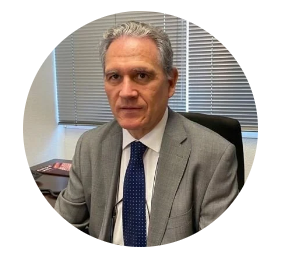
As part of our “Get to Know the EBRA Board” series, we are pleased to feature Esteban Marijuan-Requeta, Vice Chair of EBRA.
With a long-standing career in the recycling industry and more than two decades of involvement in EBRA’s governance, Esteban brings deep operational experience, strong industry continuity, and a long-term commitment to advancing the European recycling sector.
Esteban holds a degree in Industrial Engineering from the School of Industrial and Telecommunication Engineering in Bilbao. His academic background provided a strong technical foundation that has underpinned his entire professional journey in industrial recycling and resource recovery.
Since 1993, Esteban has built his career within the Indumetal Group, where he has held several senior management positions across different companies, including Indumetal Recycling, Recypilas, and Induplast. Over the years, he has developed extensive expertise in electronics and battery recycling operations, contributing to the growth and evolution of the group’s recycling activities.
Beyond his role within EBRA, Esteban also serves as Vice-President of European Electronics Recyclers Association and has been an EBRA Board member for the past 20 years. His long-standing engagement reflects a deep commitment to collaboration at European level and to strengthening the voice of recyclers in policy discussions.
As Vice Chair of EBRA, Esteban plays a key role in supporting the association’s strategic direction, fostering industry cooperation, and ensuring that the operational realities of recyclers are well represented in European regulatory developments.
You have been involved in EBRA for over 20 years—what has changed most in the battery recycling sector during that time?
When I first became involved in EBRA, batteries were still viewed largely as a niche waste stream. The focus was mainly on lead-acid batteries, nickel-cadmium, ZincCarbon/Alcaline batteries and, to a lesser extent, portable consumer batteries. Recycling was primarily a compliance and environmental issue. Today, batteries are at the centre of Europe’s industrial, energy and geopolitical strategy. The biggest change has undoubtedly been the rise of lithium-ion batteries. Twenty years ago, lithium batteries represented a relatively small share of the market. Now they dominate consumer electronics, electric mobility and energy storage systems. This has fundamentally transformed the recycling sector: the chemistry is more complex, the fire risks are significantly higher, logistics and storage have become much more challenging and the value of critical raw materials has increased enormously.
What motivated you to dedicate such a large part of your career to recycling and resource recovery?
What kept me engaged over the years is that the sector is constantly evolving. Every technological development creates a new recycling challenge, so the work is never static, never boring. You are continuously balancing engineering, economics, regulation and environmental objectives. And this keeps the sector always attractive.
How do you see the relationship between electronics recycling and battery recycling evolving in the coming years?
The relationship between electronics recycling and battery recycling will become much more interconnected in the coming years — both operationally and strategically. Today, batteries are embedded in almost everything: consumer electronics, tools, medical devices, wearables, etc. As a result, electronics recyclers are now effectively becoming the first line of battery management. This will force much closer coordination between the electronics and battery recycling industries, insurers, regulators and product manufacturers.
What are the biggest operational challenges recyclers are facing today in Europe?
The recycling sector in Europe is currently facing a combination of operational, economic and regulatory challenges that are becoming increasingly interconnected. One of the biggest operational challenges today is the growing fire risk associated with lithium batteries. Batteries are now present in almost every waste stream. Another major challenge is the increasing complexity of products themselves. Devices are becoming smaller, more integrated, harder to dismantle and more complex to recycle.
At the same time, the recycling industry will have a future only if recycling will be technically feasible and economically viable. And we are operating under significant economic pressure. In plastics recycling especially, margins have become extremely difficult due to: low virgin material prices, volatile secondary raw material markets, high energy costs and insufficient demand for recycled materials.
As Vice Chair of EBRA, what priorities are most important for you in the current regulatory landscape?
One of the most important priorities for me is ensuring that the regulatory framework remains both ambitious and implementable. Europe has set very strong objectives around batteries, critical raw materials and circularity, which are absolutely necessary. But regulation must also remain technically feasible, economically realistic and operationally workable for the companies that actually collect, depollute and recycle batteries. Battery recycling is no longer only an environmental activity; it is part of Europe’s industrial and raw materials security policy.
A further priority is ensuring coherence between different pieces of EU legislation. Too often, these frameworks evolve separately even though they affect the same operational reality. One of EBRA’s important roles is helping policymakers understand the practical interaction between these regulations. Finally, I believe one of the sector’s most important priorities is maintaining competitiveness. European recyclers operate under some of the highest environmental and safety standards in the world. That is positive, but it also creates cost pressures. If regulation becomes too fragmented or disconnected from market realities, there is a risk that investment and treatment capacity move outside Europe instead of strengthening Europe’s circular economy.
The challenge today is not choosing between sustainability and industry. The real challenge is building a regulatory framework where sustainability, industrial competitiveness and circularity reinforce each other rather than conflict with one another.
How can EBRA better support members in adapting to rapidly changing EU legislation?
I believe EBRA can add the most value by acting as both an early-warning system and a practical bridge between policymakers and operational reality. The pace of EU legislation today is extremely fast. Companies are simultaneously trying to follow developments in: the Battery Regulation, Critical Raw Materials legislation, REACH, POPs, waste shipment regulation, etc.
For many members — especially medium-sized operators — simply understanding how all these pieces interact has become a major challenge. One of EBRA’s key roles should therefore be translating complex legislation into practical operational implications.
What creates the greatest difficulty is uncertainty and fragmentation.
And I also believe EBRA should continue strengthening cooperation with adjacent sectors: WEEE recyclers, plastics recyclers, producers, PROs, etc,
The challenges surrounding batteries increasingly cut across multiple industries, and coordinated positions will carry more influence at EU level. In that sense, EBRA’s role is not only advocacy — it is also helping create enough clarity and stability for members to continue investing confidently in Europe’s recycling future.
What advice would you give to younger professionals entering the recycling industry today?
My first advice would be: understand that recycling is no longer only a niche environmental activity — it is becoming a core industrial sector. Recycling now sits at the intersection of industrial policy, energy transition, critical raw materials, geopolitics, etc.
That creates enormous long-term opportunities. I would also strongly recommend developing a multidisciplinary mindset. The sector is becoming increasingly complex: you need to understand regulation, you need to understand industrial operations and you need to understand technology and markets. The most valuable professionals are often those who can connect these different perspectives.
If you are someone eager to work, concerned about the environment, committed to preserving the planet’s resources, and interested in being part of a modern and dynamic industrial sector, don’t hesitate — the recycling industry is your industry.
You will be welcomed!